Video featuring a famous dancing of the Thai people in the northwestern Vietnam.
In-Depth Cultural Exploration of Vietnam’s Ethnic Groups: Kinh and Prominent Minorities
An in-depth exploration of the distinct cultural facets of Vietnam’s 54 ethnic communities, focusing on the Kinh majority and providing selected examples of minority groups, detailing their languages, traditional attire, spiritual beliefs, and unique customs.
SPECIAL OUTLINE
Kinh (Vietnamese) Ethnic Group: Detailed description of the language, traditional attire, ancestor worship beliefs, customs, and distribution of the majority ethnic group.
Prominent Ethnic Minorities: In-depth look at specific examples from different linguistic families, including Tay, Thai, H’mong, Dao, Khmer, Ba Na, E De, Cham, and Hoa, highlighting the characteristic cultural features of each group.
DELVE INTO THE UNIQUE LANGUAGES, TRADITIONS, AND SPIRITUAL BELIEFS THAT DEFINE VIETNAM’S DIVERSE ETHNIC COMMUNITIES.
Now! Let’s unveil the secrets of all these groups
General Introduction
Vietnam’s cultural landscape is a vibrant tapestry woven from the unique traditions of its 54 ethnic groups. While the Kinh people form the majority, the mosaic is enriched by the distinct customs, languages, and beliefs of the numerous minority communities. This article provides a deeper dive into these cultural facets, offering a glimpse into the diverse heritage that defines the Vietnamese nation.
I. The Majority Group
Kinh (Vietnamese)
Language: Vietnamese, the national language, belonging to the Viet-Muong linguistic family.This language is renowned for its tonal nature and a rich vocabulary influenced by Chinese and French.
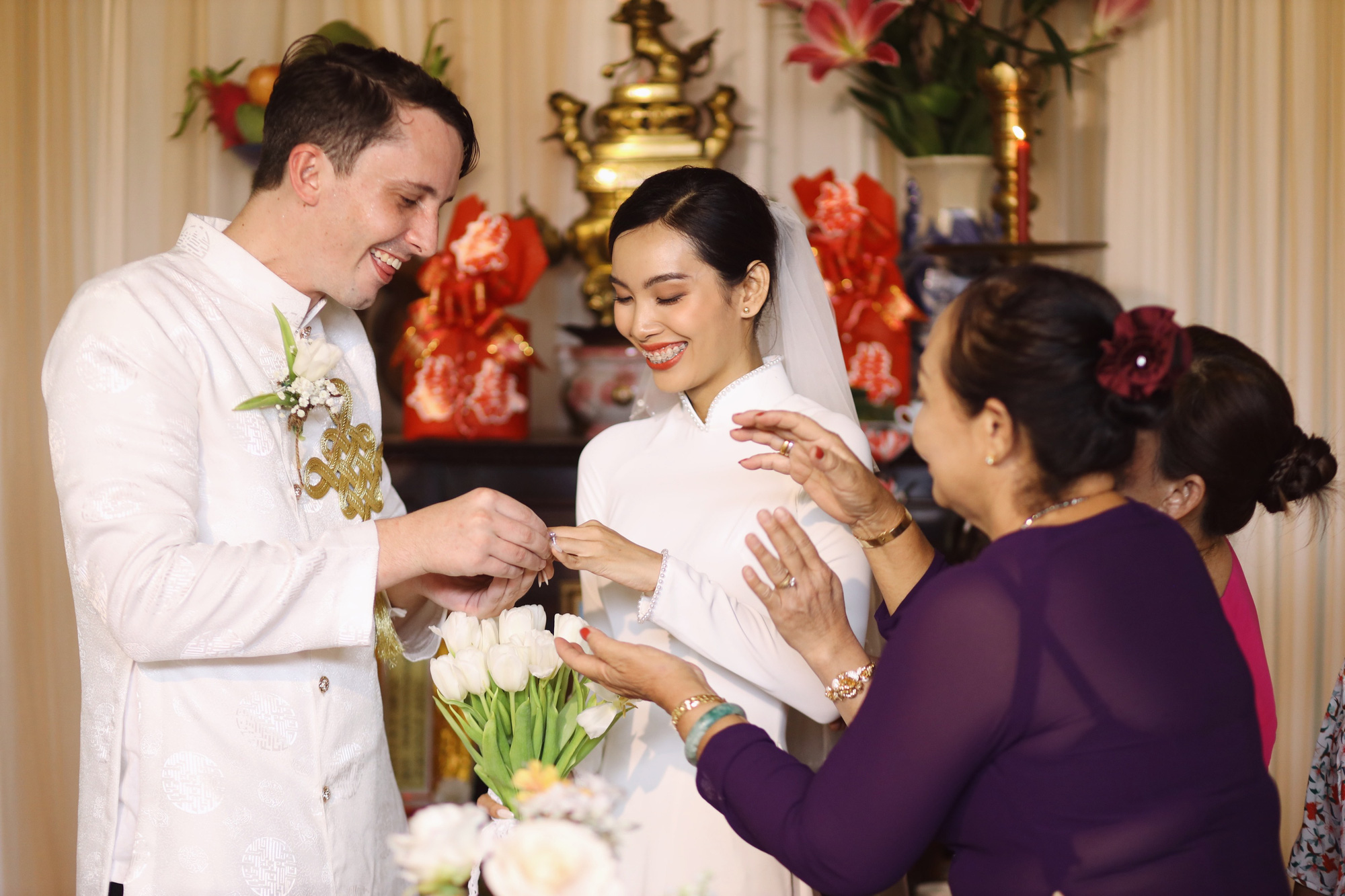
Traditional Attire: Historically, the áo dài (a long, elegant tunic worn over trousers) is the iconic traditional garment for women, symbolizing grace and femininity. Men also have their own traditional attire, though less commonly worn in daily life.
Ancestor Veneration: Deeply rooted in ancestor worship, with altars in homes and communal rituals to honor deceased family members. This practice underscores a strong connection to lineage and history.
Customs & Practices: A strong emphasis is placed on family values, filial piety, community harmony, and respect for elders. Celebrations such as Tết Nguyên Đán (Lunar New Year) are central, marked by specific customs and traditions that bring families and communities together. Wet rice cultivation has historically shaped their way of life and social structure.
Distribution: Predominant throughout the country, found in both rural and urban areas across all provinces.
Kinh people: Vietnam’s ethnic majority, rich in culture, language, and ancestral traditions.
Note: To embark on the traditional identity of Vietnam, please click here!
II.The 53 Ethnic Minority Groups (Selected Examples Highlighting Diversity)
To illustrate the vast cultural differences, here are examples categorized by their broader linguistic affiliations and key cultural characteristics:
1. Tay-Thai Linguistic Family
Tay:
Language: Tay language, which is tonal and related to Thai.
Traditional Attire: Women often wear indigo-colored blouses with silver jewelry.
Ancestor Veneration: Important, with specific rituals and offerings.
Customs & Practices: Known for their terraced rice fields, stilt houses, and vibrant folk songs (hát then).
Distribution: Primarily found in the Northern mountainous regions.
Thai:
Language: Thai language, with distinct regional dialects.
Traditional Attire: Characteristic black blouses with silver waistbands and colorful silk skirts.
Ancestor Veneration: Central to their spiritual beliefs.
Customs & Practices: Renowned for their graceful traditional dances, stilt houses with distinctive roof styles, and communal festivals.
Distribution: Concentrated in the Northwestern mountainous areas.
H’mong:
Language: H’mong languages, belonging to the H’mong-Dao linguistic family, with several mutually unintelligible dialects.
Traditional Attire: Highly varied and colorful, featuring intricate embroidery, silver jewelry, and distinctive head wraps that differ by sub-group.
Animism & Ancestor Veneration: Strong belief in spirits and powerful ancestor worship practices, with shamanistic rituals in some communities.
Customs & Practices: Known for their slash-and-burn farming practices, unique marriage customs (such as “wife-snatching”), and vibrant Lunar New Year celebrations.
Distribution: Found in the Northern mountainous regions.
Dao (Yao):
Language: Dao languages, also part of the H’mong-Dao linguistic family, with several distinct languages.
Traditional Attire: Characterized by elaborate red embroidery, silver jewelry, and special head coverings, varying among sub-groups.
Ancestor Veneration & Taoism: Influenced by Taoist beliefs and strong ancestor worship practices.
Customs & Practices: Famous for their intricate paper cutting art, knowledge of traditional medicine, and unique coming-of-age ceremonies.
Distribution: Reside in the Northern mountainous areas of Vietnam.
Tày people: Northern Vietnam’s largest minority, known for stilt houses, terraced rice, and rich folk songs.
Note: To expose the entrance fees in touristic places in Vietnam, please click here!
2. Mon-Khmer Linguistic Family
Khmer:
Language: Khmer language, belonging to the Mon-Khmer linguistic family, related to Cambodian Khmer.
Traditional Attire: Distinctive sampot (wrapped skirts) and blouses.
Buddhism: Theravada Buddhism is the dominant religion, influencing their rituals and festivals.
Customs & Practices: Rich traditions in dance, music (with instruments like the tro and roneat), and elaborate pagoda festivals. Wet rice cultivation is central to their way of life in the Mekong Delta.
Distribution: Primarily in the Mekong Delta region.
Ba Na:
Language: Ba Na language, belonging to the Mon-Khmer linguistic family.
Traditional Attire: Simple yet distinctive clothing, often featuring woven patterns.
Animism & Ancestor Veneration: Belief in spirits and a strong connection to ancestral spirits.
Customs & Practices: Known for their communal nhà rông (longhouses), gongs, and unique funeral rituals with elaborate wooden statues.
Distribution: Central Highlands.
E De:
Language: E De language, belonging to the Austronesian linguistic family (closely related to Cham), but culturally influenced by Mon-Khmer neighbors.
Traditional Attire: Characteristic indigo clothing with woven patterns.
Matriarchal Society: Traditionally known for their matriarchal social structure, where women play prominent roles in the family and inheritance.
Customs & Practices: Famous for their longhouses, epic poems, and the use of gongs in ceremonies.
Distribution: Central Highlands.
Ede people: Central Highlands’ matriarchal society, renowned for longhouses, epic poems, and gong culture.
Note: To dig deep insights the languages & communication in Vietnam, please click here!
3. Austronesian Linguistic Family
Cham:
Language: Cham language, belonging to the Austronesian linguistic family, with historical ties to the ancient Champa kingdom.
Traditional Attire: Distinctive sarongs and headscarves.
Religion: Primarily Islam, with some communities practicing traditional beliefs rooted in Hinduism.
Customs & Practices: Rich history and cultural heritage evident in their architecture, traditional dances, and weaving techniques.
Distribution: South Central Coast.
Cham people: Descendants of Champa kingdom, preserving unique Islamic and Hindu-influenced culture in Vietnam.
Note: to unlock the myth of all major religions in Vietnam, please click here!
4. Sino-Tibetan Linguistic Family
Hoa (Ethnic Chinese):
Language: Various Chinese dialects, primarily Cantonese, Teochew, and Hokkien.
Traditional Attire: Retain many aspects of traditional Chinese clothing, especially during festivals.
Ancestor Veneration & Buddhism/Taoism: Strong emphasis on ancestor worship, often practicing a combination of Buddhism and Taoism.
Customs & Practices: Preserve many Chinese cultural traditions, including cuisine, festivals (like Lunar New Year), and communal associations.
Distribution: Found in urban centers and some border regions.
Hoa people: Vietnamese ethnic Chinese, preserving rich ancestral traditions, distinct dialects, and vibrant urban communities.
This is merely a brief overview. Each of the 54 ethnic groups in Vietnam possesses a unique and fascinating cultural heritage, expressed through their languages, attire, spiritual beliefs, customs, and artistic traditions. Exploring these differences provides an incredibly rewarding and enriching experience for any visitor to Vietnam.
Note: To learn more about the Cultural Map of Vietnam, Please click here!